


Who We Are
Animal Law Reform South Africa (“ALRSA”) is a non-profit company and registered non-profit organisation (NPO).
We were informally established in 2014 by a group of lawyers interested in animal protection. In 2017, Animal Law Reform South Africa was formally registered by lawyers from academia, practice and civil society, attorney Amy P. Wilson and Professors David Bilchitz and Bonita Meyersfeld.
Utilising the law as our tool, we work on intersectional issues to ensure justice for all who require it. Through our main pillars (Animal Flourishing; Social Justice and Law), as well as through collaboration, we believe we can achieve incremental change for vulnerable beings and ensure that their interests are accounted for in the legal system.
We intend to operate as an organisation that can be approached by all relevant stakeholders ranging from animal rights, welfare and protection organisations to the government. We are willing to engage with those involved in the utilisation of animals to better their conditions and protection, while holding industry accountable. We therefore take a collaborative and not isolative approach and will work together, provided it falls within our mission and goals.
Our Vision
Animal Law Reform South Africa envisages a society whose laws, courts, enforcement agencies and private entities
advance the protection and flourishing of humans, non-human animals and the environment
and are held accountable.
Our Pillars and Focus Areas
We work through three main pillars:
ANIMAL FLOURISHING | SOCIAL JUSTICE | LAW.
We focus on a few key areas that we believe will bring about the most change. These include:
Legislative and Policy Reform | Litigation and Legal Services | Education and Research.
Our Mission
Our Mission is to create a robust regulatory ecosystem that recognises animals as sentient beings with intrinsic value, and holds those who utilise, exploit and harm them accountable.
Our Activities
- Connect issues relating to the law, animal flourishing and social justice
- Achieve the highest level of protection of nonhuman animals, human animals and the environment utilising the legal system and related avenues
- Strengthen and develop legislation and policy relating to animal, human and environmental protection in South Africa and Africa
- Litigate cases which will have a strategic value in advancing animal flourishing and protection and social justice movements in South Africa and Africa
- Provide access to legal services, advice and assistance to animal, human and environmental groups and organisations
- Educate relevant stakeholders on animal law and protection including lawyers, learners, students, professors, veterinarians, law enforcement agencies, government officials and other individuals and organisations and equipping them with the requisite knowledge to tackle issues relating thereto
- Undertake and promote research and academic output in the field of animal law and related subject matter
- Sensitise those in legal, animal, human, environmental and social justice fields to the overlap and interconnection between these fields and potential to enhance all these efforts through collaborative efforts
- Provide a platform and network for animal, human and social justice movements by connecting relevant individuals, organisations and others
- Collaborate with relevant stakeholders on certain matters in order to achieve meaningful and lasting change.
Our Structure
We are made up of a small but effective team consisting of our board of directors including our Executive Director, full-time employees and a few key institutional officers who assist with research, administration and financial matters.
We have additional consultants working on strategic projects and providing advice and assistance on an ad hoc basis.
In addition, we work with legal professionals, experts, students, NGOs, coalitions, volunteers and other stakeholders on a broad variety of issues.

Amy P. Wilson
She is a licensed attorney with over 15 years of professional legal experience. She is an LLD candidate and researcher focusing on the intersection of the rights of humans, nonhuman animals and Nature in law and policy and creative approaches to the attainment of an inclusive system of justice. Amy is an Independent Expert with the United Nations in Harmony with Nature Programme and a founding steering committee member of the Global Alliance for the Rights of Nature: Africa Hub. She is a Lecturer and Research Associate with the University of Johannesburg and a Senior Adjunct Lecturer with the University of the Western Cape. Amy is the first South African to graduate with a master’s degree in animal law, leads a number of animal protection organisations throughout Africa and has worked with several animal nonprofits in the USA and internationally. Amy graduated with her BCOM and LLB Degrees from the University of Johannesburg and during her legal studies, established the first “Animals in Law” group at UJ. Amy is a qualified attorney who practiced for over 6 years including as a Senior Associate in the corporate commercial department at Africa’s largest law firm ENS Africa and an international law firm, Hogan Lovells. In academia, Amy has worked as a Fellow specialising in aquatic animal law and with the Animal Law Clinic at Lewis & Clark Law School, Portland and has worked at UCLA University of California, Los Angeles Law School as the Brooks Institute for Animal Rights Law and Policy Fellow. Amy has been published in international peer-reviewed journals and has authored several book chapters. She is currently co-authoring a book on aquatic animal law and co-editing the first animal law book in South Africa with Professor Melanie Murcott. In May 2022, Amy co-taught the first animal law course in South Africa with Professor David Bilchitz which they taught again in 2023 and in 2025. In 2025 Amy co-taught the first ever Animal Law and Rights course at Master's level in Africa.

Professor Melanie Murcott
Melanie is an advocate for social, environmental, climate, and interspecies justice: issues she views as intertwined. She pursues this advocacy in various ways, including as Vice Chairperson of the Environmental Law Association of South Africa, Director of Animal Law Reform South Africa, and Board member of the Centre for Child Law. She also co-leads, with Dr Maria Antonia Tigre (Sabin Center for Climate Change Law at Columbia University), a project for the Global Network of Human Rights and the Environment focused on climate litigation in the Global South. She sits on the editorial board of Environmental Policy and Law. Her research interests proceed from an intersectional understanding of (in)justice and include environmental constitutionalism, climate law and governance, and ecological sustainability. Melanie believes, as Maya Angelou says: “no one of us can be free until everybody is free”. Importantly for Melanie, a flourishing environment creates the necessary conditions for freedom, since humans and the environment are fundamentally connected.

Professor David Bilchitz

Tokyo Ndlela
He is legally trained in commercial and environmental law and has advised across the mining, energy, infrastructure, and media sectors, with a particular focus on ESG risk, community legitimacy, and regulatory compliance. His work frequently involves engagement with traditional councils, mining-affected communities, and royal households, supporting socially sustainable project development and the integration of customary governance structures into modern regulatory and corporate frameworks.
Tokyo’s stakeholder practice emphasises responsible resource governance, environmental stewardship, and the ethical treatment of vulnerable interests—human and non-human alike. This approach underpins his contribution to animal law reform, where he brings a pragmatic understanding of how law, economics, culture, and governance interact in real-world reform efforts.
He is a published author in environmental law and animal law, and a contributing author to South Africa’s first animal law textbook. His academic work includes research informed by behavioural economics, examining the environmental impact of meat consumption and proposing regulatory mechanisms to internalise ecological externalities. During his university years, he co-founded and led Saving Sentience Africa, a socio-environmental justice and animal rights organisation that established student chapters across multiple South African universities.
Tokyo holds an LLB and an LLM in Environmental Law from the University of Pretoria, and an MBA from IU International University of Applied Sciences. He also serves in advisory and non-executive capacities across environmental, extractives-adjacent, and media organisations, contributing to governance, strategy, and sustainability oversight.
Michaela Tafani
Attorney & Programmes Lead
Michaela is an admitted attorney holding LL.B and LL.M (Environmental Law) degrees from the University of Pretoria. Her journey in the legal realm began in the field of immigration law, where she gained invaluable experience for four years. However, her true calling and fervent passion lie in animal law.
During her LL.B studies, Michaela immersed herself in the critical examination of the detrimental impact of testing cosmetic products and ingredients on non-human animals, igniting her advocacy for ethical and cruelty-free alternatives. Michaela’s LL.M mini dissertation focused on the effects of marine seismic surveys on whales, addressing vital issues surrounding non-human animal welfare, corporate accountability, and the intersection with climate change.
Fuelled by her innate empathy and determination, she seeks to bring about meaningful change through legal advocacy, ensuring that animals are granted the compassion, respect, and protection they deserve.

Phindile Khulu
Financial and Compliance Officer (Consultant)
Phindile Khulu (Phindi) is a financial expert with nine years in the social justice sector. She is passionate about community wellbeing and makes it her social change initiative. She holds a Bachelor of Business and Commerce (Accounting) (Monash University), a Postgraduate Diploma in Specialised Accountancy (Wits), a Postgraduate Diploma in Business Administration and a Master of Business Leadership (both from UNISA Graduate School of Business Leadership).
Phindi is a Finance Project Accountant at the Law School of Wits University. Prior to that, she mainly focused on the finances of the Centre for Applied Legal Studies (CALS), also located at Wits Law School. She is a mother and a mentor to many students. Additionally, she is a board member to other public interest organisations.

Misha Dhupelia
Communications & Campaigns Co-ordinator (Consultant)
Misha Dhupelia is a consultant working across systems, culture, and knowledge production, with a focus on how complex ideas are translated into forms that enable participation, engagement, and change. Her work spans media, higher education, and social impact, where she has developed programmes, platforms, and strategic frameworks that connect issues to people in ways that are both accessible and contextually grounded.
She holds a Master’s degree in Innovation, with research focused on plant-based food systems and ecological sustainability. Her interests are shaped by an intersectional understanding of justice, particularly at the intersections of environmental sustainability, animal welfare, and social systems.
At Animal Law Reform South Africa, Misha contributes as a communications and campaigning consultant, supporting work that advances public engagement and advocacy for animal protection and legal reform. She is interested in how narrative, knowledge, and power intersect, and how they can be mobilised in support of more just and sustainable futures.

Banathi Nkehli
Legal Researcher & Administrative Officer (Consultant)
Banathi Nkehli, is a lawyer whose legal education began in 2018 at the University of Pretoria. Banathi Nkehli holds the following qualifications all obtained at the University of Pretoria; BA Law (Cum Laude) LLB (Cum Laude) and an LLM in Human Rights from the Centre for Human Rights. Banathi has always had a keen interest in social justice, public interest work and a general enthusiasm for helping others. Banathi’s public interest roots go as far back as his student days as a news journalist and later News Editor at the University of Pretoria’s student publication PDBY (formerly Perdeby) where he was their regular cartoonist and covered a series of investigative news stories.
Banathi began his legal journey as an Academic Associate with the Department of Public law where he assisted in the facilitation of lectures and other educational and research activities in the areas of Administrative Law, Constitutional law, Media and Disability Rights. Banathi would leave academia and work in the property law industry as a Candidate Attorney, where his resolve to be a part of the public interest and human rights space was affirmed with new vigour practical legal knowledge and skill.
Banathi is a deeply empathetic and passionate young man with a love for life in all its many faces, having grown up in the Midlands region of Kwa-Zulu Natal, Banathi is no stranger to animals and the discussion around animal protection. Guided by a desire to make the world a better place, Banathi joins our team.

Paula Knipe
Lawyer: Food Systems & Farmed Animals
Paula Knipe is a feminist legal researcher and food systems lawyer with expertise in constitutional law, food governance and social justice. She holds an LLB and an LLM cum laude (Constitutional Theory) and is completing her LLD in Comparative Constitutional Law at the University of the Western Cape. Her doctoral research examines the structural and commercial determinants of malnutrition and non-communicable diseases among women in South Africa, focusing on the social, public health, and environmental impacts of gendered failures in the food system.
With over seven years of experience, Paula has advanced food system reform through legal research, policy analysis, advocacy, teaching, and coalition-building across civil society and academia in South Africa and the region. She has published in national and international peer-reviewed journals, authored two book chapters, and presented at the NGO Forum of the 77th Ordinary Session of the African Commission on Human and Peoples’ Rights. She also serves on the Steering Committee of the Union Against Hunger, a multi-stakeholder alliance promoting accountability and equity in South Africa’s food systems.
Her work employs a systems-thinking, care-centred approach, recognising the interconnectedness of human, animal, and ecological wellbeing. She is dedicated to advancing legal accountability and collective responsibility in South Africa’s food and agricultural sectors and to using the law as a tool to support ethical, just, and sustainable transformation.

Muyenga Mugerwa-Sekawabe
Legal Research Consultant: Aquatic Rights Project
Muyenga Mugerwa-Sekawabe is an Attorney of the High Court of South Africa with experience in environmental, refugee, education, and LGBTQIA+ rights research, advocacy, and strategic litigation. They started their career at the Legal Resources Centre as a candidate attorney.
In 2024, Muyenga spent six months at a human rights think tank in Bogotá, Colombia, where they contributed to strategic litigation initiatives across a range of human rights issues, including the protection of the Colombian Amazon. While completing their Master of Laws at the University of Cape Town, they undertook courses in Pollution and Natural Resources Law, which sparked their interest in the Rights of Nature, animal rights, and animal welfare.
Muyenga holds a Bachelor of Social Science, Bachelor of Laws, and Master of Laws from the University of Cape Town.
They are passionate about using the law creatively to strengthen legal protections for the environment, animals, and human rights.
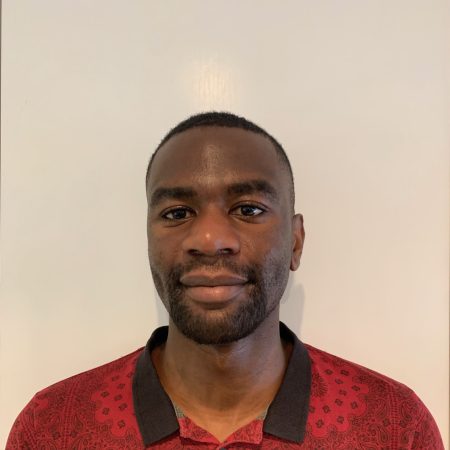
Dr. Tarryn Bannister
Lawyer & Programme Lead: Corporate Accountability
Dr Tarryn Bannister holds BA Law, LL.B, LL.M and LL.D. degrees from Stellenbosch University. She graduated with her LL.B in 2010 and subsequently completed a research-based Master’s degree, cum laude, on the right to have access to health care services for survivors of gender-based violence. In 2016, she completed her doctoral studies, titled “The implications of a relational feminist interpretation of the socio-economic rights of female cohabitants.”
Tarryn’s experience traverses’ legal practice, corporate compliance, human rights, civil society and higher education. She is passionate about social justice, accountability, and the law’s role in addressing systemic inequality and vulnerability. Building on this foundation, Tarryn’s work has increasingly focused on the intersection of animal protection, environmental justice, and corporate accountability mechanisms that are able to foster a more just and compassionate society.

Saamiya Alli
Lawyer & Legal Researcher
Saamiya is an admitted attorney and obtained an LLB from the University of Cape Town and an LLM in Human Rights Law (awarded with distinction) from the University of Aberdeen.
During her undergraduate studies, Saamiya developed a keen interest in human rights, environmental, and international law, selecting Environmental Law and Refugee Law as elective subjects and volunteering at the University of Cape Town Refugee Rights Unit. Her postgraduate dissertation examined the application of International Humanitarian Law to the armed conflict in Yemen.
She completed internships at the Women’s Legal Centre, the Dullah Omar Institute, and Lawyers for Human Rights. She later worked as a Legal Analyst at Cognia Law before joining LexisNexis as a Legal Editor.
Saamiya is committed to using the law to advance protections for animals, humans, and the environment.

Chelsea Ramsden
Animal Law Project Consultant
Chelsea Ramsden is a legal consultant specialising in animal law, constitutional law, and human rights. She holds an LLB and an LLM in International Law from the University of Johannesburg, and a further LLM in International Human Rights Law from University College Dublin.
She has worked across South Africa’s public interest and legal sectors, including at the Constitutional Court, the Helen Suzman Foundation, and in private practice, with a focus on legal research, policy development, strategic litigation, and law reform.
Chelsea’s research sits at the intersection of animal law, constitutional values, and justice. She is particularly interested in developing legal frameworks that recognise animals’ interests and strengthen their protection under South African law.
Outside her formal legal work, Chelsea has spent many years involved in animal rescue and welfare, bringing hands-on experience to her advocacy. She is committed to advancing animal justice through legal reform and by building a more just, compassionate legal system for all sentient beings.

Dr. Tracey Kanhanga
Research Assistant: SALAWA (South African Law and Welfare for Animals Book Project)
Dr. Tracey Kanhanga is a post-doctoral research fellow at the South African Institute for Advanced Constitutional, Public, Human Rights, and International Law (SAIFAC) at the University of Johannesburg. She is also an editor at African Law Matters.
Tracey worked as an assistant at the South African Research Chair in International Law (SARCIL). She holds a Bachelor of Law (Honours) from the University of Zimbabwe, an LLM, and an LLD from the University of Johannesburg. Her research interests lie in international environmental law, climate change litigation, and human rights law.

Nadine Nyamangirazi
Legal Researcher: Leopard Project
Nadine Nyamangirazi is a PhD student at the University of Cape Town (UCT). She also serves as a part-time law lecturer at Eduvos University, and a dedicated law clerk at the Democratic Governance and Rights Unit (DGRU). Nadine obtained a BA with a double-major in Law and Organisational Psychology, and an LLB from Rhodes University. She graduated her LLB with placement on the Dean’s List, and with an award for Academic Half-Colours. During her LLB studies, Nadine served as a law tutor and an academic mentor at Rhodes University. Nadine has also obtained an LLM with an International Law specialisation from UCT and with distinction in her dissertation.
Her research focuses on International Trade Law, Regional Integration, and International Environmental Law, particularly within the African context. Nadine’s work has garnered recognition, notably at the 2023 UCT 3-Minute Thesis Competition, where she earned the runner-up prize, and through her presentations at prestigious conferences such as the 2024 Southern African Law Teachers Conference (SALTC), and the 1st Annual Colloquium on Trade and Industrial Policy (ACTIP). With a keen interest in advancing legal frameworks and fostering academic discourse, Nadine is a vibrant advocate for progressive legal reform.
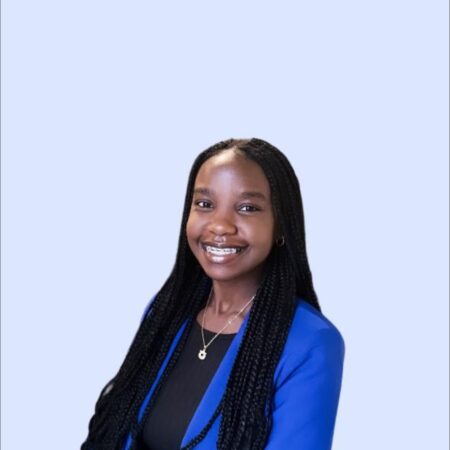
Dr. Makanatsa Makonese
Project Lead
Dr. Makanatsa Makonese holds a PhD in Law from the University of Zimbabwe with research focus on women’s law, land law and international human rights law.
Her passion lies in using the law, national constitutions and international human rights frameworks to promote human rights. She is a co-founder of the Zimbabwe Environmental Law Association (ZELA) and is currently the Deputy Chief of Party for the American Bar Association-Southern Africa Human Rights Programme based in Johannesburg where her work focuses amongst other themes on protecting and promoting women’s customary land rights and indigenous peoples’ rights.

Lifen Chien
Legal Research Consultant: Corporate Accountability Programme and Others
Li-Fen is a non-practising legal practitioner with over 10 years of professional experience, mostly focussed on environmental and corporate law. She started her career as a corporate attorney at Norton Rose Fulbright, and thereafter specialised in environmental law at Cliffe Dekker Hofmeyr. She then joined the Centre for Environmental Rights (a law clinic that helps communities realise their right to a healthy environment) as an attorney in the Corporate Accountability and Transparency Programme, before becoming the Centre’s first office manager. She has since worked for a legal services company, the City of Cape Town, and the University of Cape Town.
Li-Fen holds an LLM (Environmental Law) from the University of Western Cape in 2020, and her research focussed on the personal liability of directors for environmental transgressions.

Cheslyn Ceaser
Legal Researcher & Senior Legal Researcher
Cheslyn is a proud graduate of The University of the Western Cape (UWC) completing a Bachelor of Laws degree in 2018. He completed a Master’s degree in Environmental law with a focus on Climate Change in 2020 from his alma mater. Cheslyn has been a Graduate Lecturing Assistant and Coordinator at the Law Faculty of UWC, thereafter becoming an educator at Boston College and City Campus.
In 2021 he was a part time lecturer at Cape Peninsula University of Technology (CPUT) while working on various research projects and commentary for The Coalition of African Animal Welfare Organizations (CAAWO) and Animal Law Reform South Africa (ALRSA) respectively.
Cheslyn is a recipient of the Growth Bursary from the Global Environmental Law Centre (GELC) and is currently pursuing a doctorate degree with a focus on Animal Welfare in Animal Agriculture at UWC.
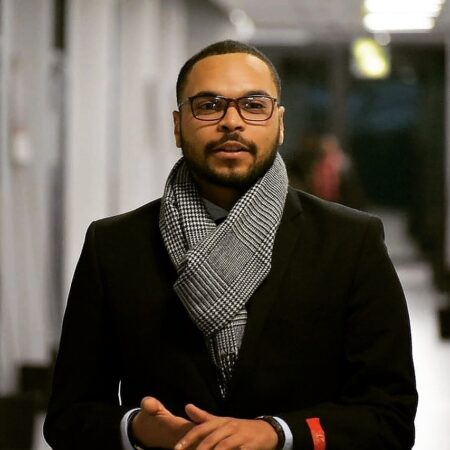

Co-Founder: Professor Bonita Meyersfeld
Bonita Meyersfeld is a human rights lawyer and academic. She is an associate professor at Wits Law School and from 2012 to 2017 she was the director of the Centre for Applied Legal Studies. She is an editor and chair of the board of the South African Journal on Human Rights and the founding member and chair of the board of Lawyers against Abuse. Bonita obtained her LLB (cum laude) from Wits and her masters and doctorate in law from Yale Law School. Bonita teaches and publishes in the areas of international law, business and human rights, women’s rights and international criminal law. She is the author of the book, Domestic Violence and International Law. Prior to Wits Bonita worked in human rights law in the House of Lords and has worked at various non-governmental organisations in the United States, the United Kingdom and South Africa. Bonita has presented expert statements to various UN fora and was appointed by the Government of Ecuador as part of a five member expert panel to provide guidance to the Inter-Governmental Working Group on a binding instrument for business and human rights.
Bonita has been appointed Chevalier de l’Ordre national du Mérite (Knight of the National Order of Merit) by the President of the French Republic in honour of her work on human rights and gender-based violence.